



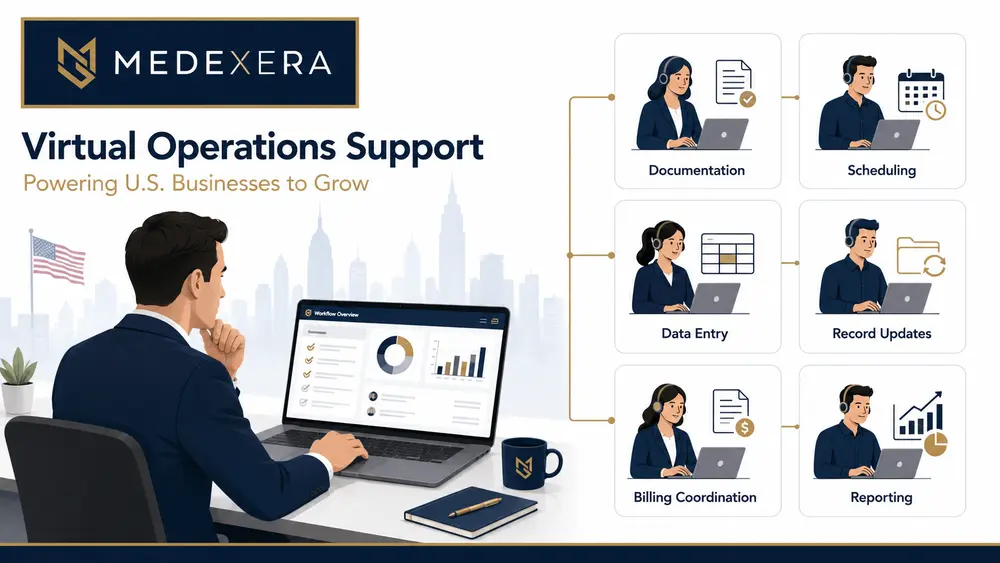
Most growing businesses hit a point where the administrative side of operations quietly starts consuming more internal capacity than it should. Scheduling is managed inconsistently. Follow-up falls through the gaps. Document coordination gets pushed to whoever has a few minutes. None of these are strategic failures, but each one costs time, creates friction, and puts pressure on a team that is already stretched.
This is where virtual operations support comes in. It is structured, remote support for the coordination-heavy, recurring administrative work that keeps a business running but does not need to be handled by a full-time internal hire.
This article explains exactly what virtual operations support includes, which tasks make sense to hand off first, and what a structured outsourcing relationship actually looks like for a U.S. business.
Why Growing Businesses Start to Feel Operational Strain Before They See It
When a business is small, administrative tasks are manageable because the volume is low. One person can handle scheduling, follow-up, document coordination, and internal communication without it becoming a problem.
That changes as the business grows. More clients mean more appointments to schedule, more follow-up to track, more documentation to manage. The volume increases, but the team does not always grow at the same rate.
The result is that experienced team members spend hours each week on coordination work instead of the higher-value responsibilities they were hired for. Managers find themselves answering scheduling questions. Operations staff spend afternoons chasing down missing documents. Follow-up tasks pile up because no one owns them consistently.
By the time leadership notices the problem, the team is already absorbing a significant hidden cost in time and attention. The work is not disappearing. It is just being spread unevenly across people who have other priorities.
Structured virtual operations support addresses this before it compounds further.
What Does Virtual Operations Support Actually Include?
Virtual operations support covers the coordination and administrative functions that keep daily operations organized but do not require in-house decision-making authority. The specific scope depends on the business, but most structured support engagements cover four core areas.
Communication and Coordination Support
This covers the recurring communication workflows that tend to fall through the cracks when internal teams are stretched: reminders, status updates, task coordination, client follow-up, and internal escalation tracking.
When these processes are not owned by a dedicated resource, they become reactive. A message goes unanswered for a day. A follow-up reminder is not sent. A small coordination gap turns into a missed deadline. Structured support ensures these workflows run on a predictable schedule rather than on whoever has time.
Scheduling and Calendar Management
Scheduling support covers appointment setting, meeting coordination, reschedules, cancellation management, and reminder workflows. For businesses that operate on appointments or have active client calendars, consistent scheduling management directly affects revenue and client experience.
Without it, scheduling errors accumulate. Double bookings happen. Appointments are missed because reminders were not sent. Reschedule requests sit unanswered. A structured support process handles all of this reliably and without requiring internal team involvement.
Issue Follow-Up and Task Tracking
Many businesses have recurring operational issues that require consistent follow-up to resolve: outstanding items, unresolved requests, open tickets, and tasks waiting on an external response. When no one owns this follow-up consistently, issues remain open longer than they should.
Virtual operations support can take ownership of tracking these items, maintaining follow-up cadences, and escalating when action is needed. This improves response times and reduces the number of issues that stall simply because they were not followed up on.
Document and Workflow Management
This covers document coordination processes: organizing records, managing incoming documentation, ensuring required files are in the right place, and supporting the workflow discipline that keeps operations from becoming disorganized as volume increases.
Businesses that handle high volumes of documentation often benefit from pairing this service with documentation and data processing support for a more complete administrative coverage model.
Which Administrative Tasks Are the Right Ones to Hand Off First?
Tasks That Consume Time Without Requiring Internal Judgment
These are the tasks where the process is defined, the output is predictable, and the main requirement is consistency. Appointment reminders, scheduling confirmations, follow-up messages, document intake tracking, and recurring status updates all fit this profile.
They do not need a senior team member to handle them. They need someone who will handle them on time, every time, without gaps. That is exactly what structured virtual support is designed to deliver.
Tasks That Create the Most Internal Friction When Left Unmanaged
The second category includes tasks that are not difficult individually but create downstream problems when they are not managed consistently. Reschedule coordination that sits unhandled for two days creates a client experience problem. Missing documents that were never followed up on delay a process. Open issues that were not tracked create operational blind spots.
These tasks are worth handing off early because the cost of leaving them unmanaged accumulates quickly. Businesses that address these friction points early tend to see the impact on team capacity within the first few weeks of structured support.
Tell Us About Your Day-to-Day Operational Needs
How Does Virtual Operations Support Differ From Hiring an Administrative Employee?
This is a practical question most businesses ask before making a decision, and it deserves a direct answer.
Hiring a full-time administrative employee involves salary, benefits, onboarding time, ongoing management, and the fixed cost of that role regardless of how workload fluctuates. The Bureau of Labor Statistics notes that employee benefits typically add 30% or more to base compensation costs for U.S. employers, which means the true cost of an in-house hire is consistently higher than the salary alone.
Virtual operations support eliminates most of that overhead. There is no benefits cost, no dedicated desk, and no extended onboarding period before the work starts moving. The scope can be adjusted as the business changes, which makes it a more practical model for businesses in growth phases where workload is not yet predictable.
For businesses that need structured, reliable administrative coverage without committing to a full-time hire, this model is often the more cost-effective path.
What Should You Expect During Onboarding and Workflow Setup?
One of the most common concerns about outsourcing operations support is the transition itself. How long does it take? What needs to happen before the team can start working?
With a structured approach, the onboarding process follows a defined sequence. The first phase covers workflow mapping: understanding how your current processes work, what the hand-off points are, and where the gaps exist. This does not require rebuilding your internal systems. It requires documenting what is already happening so the support team can take it over consistently.
The second phase is documentation review. Any relevant records, templates, tools, or communication workflows are reviewed so the support team has the context they need to operate without constant questions.
From there, the team takes over the day-to-day activity. Most businesses are fully operational within two to three weeks of starting the process.
Medexera’s business onboarding support approach follows the same structured methodology, which means businesses that need onboarding and verification support alongside operations coverage can manage both through a coordinated handoff.
Request an Operations Support Consultation
How Medexera Structures Virtual Operations Support for U.S. Businesses
Medexera’s approach to virtual operations support is built around process ownership, not task completion. The difference matters in practice.
Task completion means work gets done when it is assigned. Process ownership means the workflow runs consistently whether or not anyone at your business is actively managing it. Reminders go out on schedule. Follow-up happens without prompting. Documents are tracked and organized without a team member needing to stay on top of it.
For businesses managing multiple workflow areas, Medexera’s support can be coordinated across services. Billing operations support and payment recovery support run in parallel with virtual operations support, reducing the total administrative load on internal teams across all three areas simultaneously. Businesses that need broader coverage can review the full range of back-office support services to identify the right combination.
The goal is operational reliability, a back-office that runs consistently without requiring constant internal attention to keep it on track.
If you want to discuss your current workflows directly, you can reach the Medexera team by email at info@medexera.com or message us directly to start a conversation about where structured support can make the most immediate difference.
Virtual operations support covers the coordination-heavy administrative work that takes the most time but requires the least internal decision-making: scheduling, follow-up, communication workflows, and document management. For growing businesses, this work does not disappear when it is deprioritized. It accumulates as friction, missed deadlines, and capacity lost to low-value tasks.
The right support structure removes that friction without adding headcount. It gives internal teams their time back, keeps recurring workflows running on schedule, and scales as the business grows.
If your team is spending more time on administrative coordination than it should be, the next step is a straightforward conversation. Tell us about your current workflows and we can identify where structured virtual operations support will have the most immediate impact. For more operational guidance for growing businesses, visit the Medexera blog.